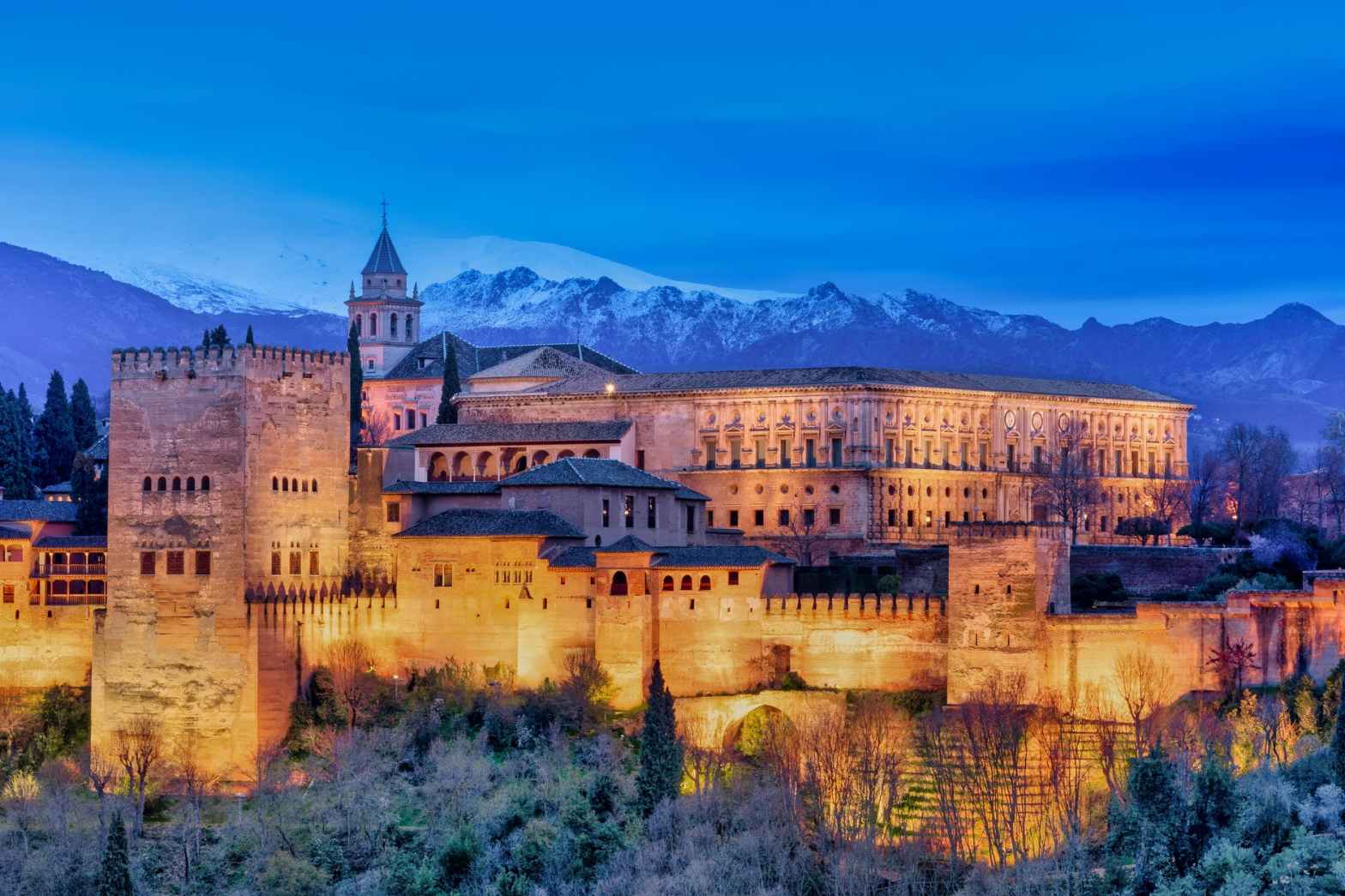
It was early morning. The air was a bit crisp and dewy, and a morning fog was hanging over the bus station. The air smelled like a combination of grass, pollen, fruit, and rubbish. We had water and provisions for lunch as well as luggage for a couple of days. There were few people at the bus station this early in the morning. The bus staggered off on the small roads before finding the main road and speeding towards Granada. After a little over three hours, we drove through the small town of Santa Fe in Andalucía. Today, not many people think of this small, sleepy town on their way to the area’s major attraction, The Alhambra. The Alhambra, which supposedly means the Red Castle, was built in the mid-14th century by the Moorish rulers of the Emirate of Granada. Santa Fe was originally built as a siege town with the aim of expelling the Moors from Spain. During a few months in the spring of 1492, three major events took place in Santa Fe that still characterises our modern world.
Abu Abdallah Muhammad XII was the son of Abu l-Hasan Ali, Sultan of the Emirate of Granada whom he succeeded in 1482. He was to be the last of a nearly 800-year-long series of North African rulers in Al-Andalus. On January 2ND, 1492, he had to hand over the Red Castle to Los Reyes Católicos – Queen Isabel and King Ferdinand. Thus, Abu Abdullah had to take his hundred warriors with him and leave The Alhambra. According to the story, he turned and sighed deeply as he came to the last mountain pass where he could see the Alhambra glowing red at sunset. The mountain pass is still called El suspiro del Moro – The Moor’s sigh.
Another historical figure was present when Abu Abdullah handed over The Alhambra. He was a somewhat fussy Genoese sailor who had repeatedly tried to get Los Reyes Católicos to sponsor an expedition he wanted to go on. He wanted to find the sea route to India. Each time they had turned him down. The sailor’s name was Cristobal Colón. Whether it was a result of the victory that caused Queen Isabel to change her mind is not easy to say, but on April 17TH 1492 the agreement was signed, and Cristobal could start preparing the expedition. In August the same year he sailed out of Castile with three ships, and on October 12TH he reached what he thought was India. He landed on an island in the Bahamas. The inhabitants called the island Guanahani. Cristobal named it San Salvador.
The third event this spring was that Isabel and Ferdinand made a decision with enormous consequences for Spain, the Middle East and for the loneliest people in history. All Jews who did not want to convert to Christianity were to be banished from the land. Some became Christians, but over 200,000 were expelled from Spain.
Within a few days, in the hot little town of Santa Fe, decisions were made that expelled both Moors and Jews from Spain and at the same time laid the foundation for the colonisation of America that gave Spain access to the unimaginable riches of the new world.
We left the bus and found a taxi that took us the last leg up to The Alhambra. The gate to the Red Castle was by no means impressive. It was narrow and high and had the same proportions as a curved door. The portal´s name is Puerta de la Justicia, but I have no idea who it would be justice for. If the gate was not so impressive, the rest of Alhambra was very impressive! From the outside, Alhambra looked like a fortress, which stood in contrast to the inner, refined splendour. The numerous archways, richly carved columns, and tiles made my neck stiff trying to memorise how wonderfully beautiful and exquisite everything was. We had slot time tickets to the different parts of the facility, which meant that there were relatively few people at the same time. At times it actually felt like we were there alone. However, the most magical experience for my part was to spend the night inside the Red Castle. The Parador San Francisco has only 36 rooms and was originally constructed as part of a mosque complex between 1332 and 1354. After Los Reyes Católicos took over, it was rebuilt and used by the Franciscans as a convent. Both Isabel and Ferdinand were buried here at the time of their death and were later moved to Capilla Real de Granada.
Being able to stay in here after all the other tourists had left the castle hill was absolutely wonderful! Being able to light a cigar, reflect on what this place had experienced over the centuries, stroll on the same slopes and paths that Abu Abdallah, Isabel, Ferdinand and maybe Cristobal Colón had strolled on before me. Sitting on the terrace with a glass of red wine and philosophise about life and existence while the light from the sunset played over The Alhambra and demonstrated why it was called The Red Castle. To just sit on the terrace and experience how the sounds changed from day to evening and to night while the starry sky gradually appeared. That was a magical experience!
As Salman Rushdie wrote in The Moor´s last sigh; “A sigh isn’t just a sigh. We inhale the world and breathe out meaning. While we can. While we can.” And right there I could. I could.
 Billy Bronco is telling you