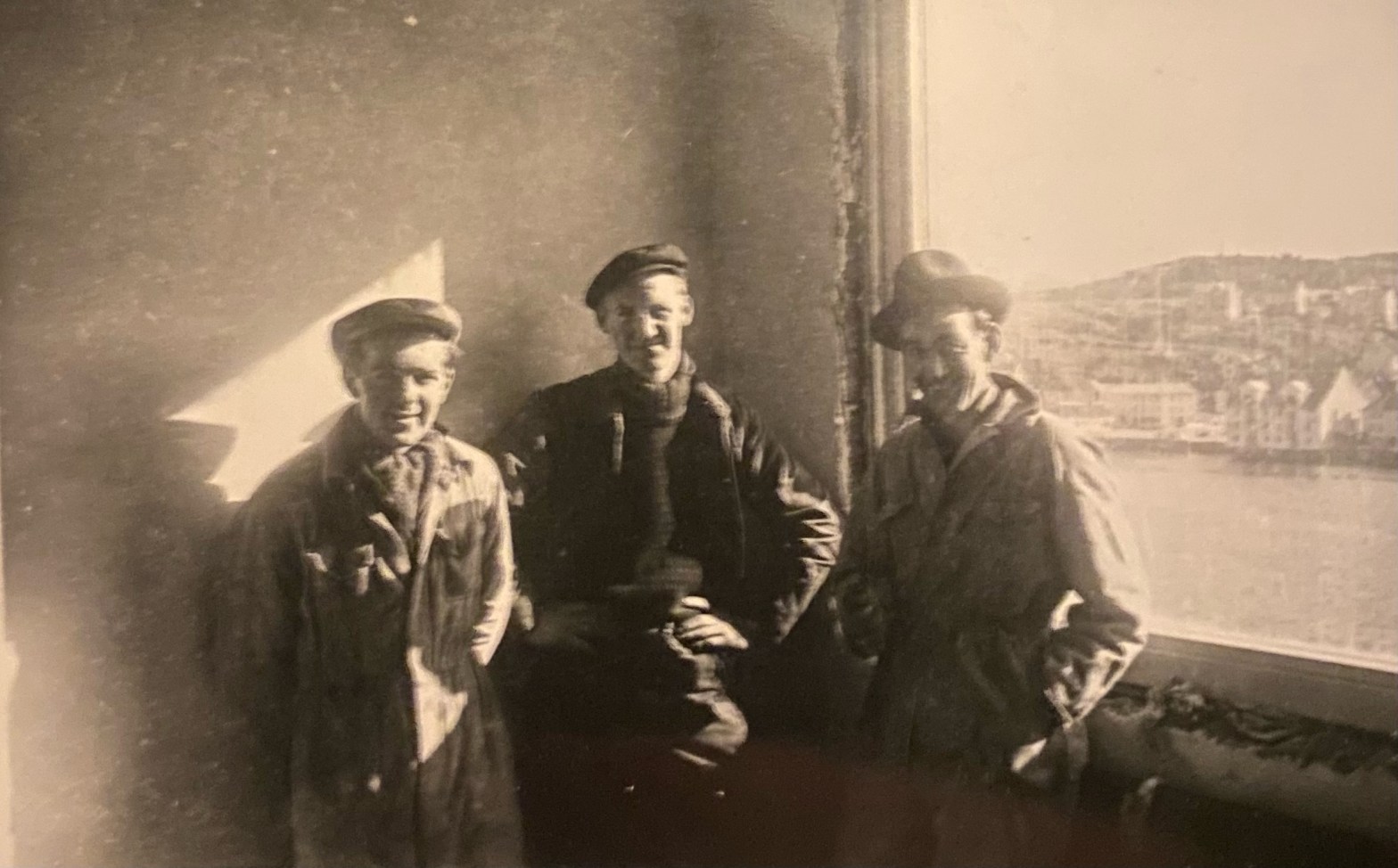
There was a lot of grey weather, rain and constant fog in the town I grew up in. As I remember it, it rained every day. Not all day, but several times each day. There was a smell of wet, salty, wellies, rain gear and damp wool everywhere in my childhood. Down by the harbour ships came and went incessantly. There were ships from almost every corner of the world. When it rained, they slipped almost silently from the dock and disappeared into the mist on their way out to the ocean. When the boats left the quay, the casual workers who had assisted in getting the cargo on board got a break. They spent their break behind one of the long, worn, green warehouse buildings along the quayside. They sat on wooden crates with the collar of their peacoats folded up tightly over the ears and the caps pulled down at an angle. They relaxed with a cigarette and a bottle of beer or something stronger in a bottle that was passed around. These were often men who had travelled the seven seas and worked hard to see the world out there. They were seamen who had sailed overseas during the war. Who had lived with the fear of submarines, torpedoes and icy water. They had sailed at the greatest risk to their lives to transport food and war materials to allies around the world. Several had narrowly avoided torpedoing. Some had experienced their ship disappearing into the depths with shipmates on board while they themselves lay in the icy dark North Sea. They didn’t share their stories. The experiences were too brutal and too strong. Others who hadn’t experienced the trauma weren’t interested in hearing about it and just wanted to move on. They wanted to rebuild the city and allow trade to resume. Trade in the city and with the world had to go on. For those sitting behind the green shed, the journey onward meant that they were left behind. It didn’t seem like they had any choice or that they were bitter about it. They had, in a way, resigned themselves to their own silence. They had become immune to all the world’s injustice. They had sailed on tankers for a few pounds more a week. They often only received part of the salary. They were to get the rest when the war was won. They won the war, but they never got the full salary. They were cheated out of many years’ pay. Many never returned home and several had such great trauma that they could never live normal lives again. Here sat many of them. Damp both outside and inside in silence until the next ship came out of the harbour mist and docked.
It was easy to see the scars life had inflicted on these men. In a way, they wore the trauma on the outside and had a way of life that made it obvious to everyone around them that they were at the bottom of society´s ladder. They had a past, but no longer a future. Some of them were given nicknames and few remembered what they were called back when they had a future and a life ahead of them. They slipped into the cityscape as urban originals. It took me a little longer to see that there were scars in many more than these. There were many who outwardly appeared to be both successful and extrovert, but who carried wounds inside that no one could see. Perhaps those closest to them knew their struggles, but in a small town it is important to preserve the facade almost at all costs. Rumours started and once they did they were impossible to stop. There were rumours about wives of social elites who bought alcohol on the black market, working people who struggled with nightmares, alcohol, nerves and who isolated themselves, about wife abusers, pill abuse, psychological problems and everything in between. It was not always easy to know who was struggling. Not all the rumours were true.
There were few cars around, so most craftsmen in the city cycled to and from work. Whether they were carpenters, plumbers or mechanics who had to repair something on a fishing boat that had problems with the engine or a winch. One I knew well was a seemingly regular guy who was about 30 years older than me. He always had a joke and a good laugh to offer. He whistled and was always cheerful as he cycled around town with the toolbox attached to the boot. He was a plumber. The city was rather small so it took less than 15 minutes to get anywhere by bike. Everyone who had used his services had nothing but good things to say. He was a valued and important citizen in the rebuilding of the town which had been bombed to ashes a few years earlier. He was 8 years old when the war came to town and 13 years old when it ended. The fact that he spent his entire childhood and formative years in a city that was first bombed and then occupied naturally also influenced his adult life. He kind of carried the war with him in almost all the stories he told. Whether it was stories from the occupation or from his own time as a soldier in the 50s. It seemed in many ways that he never quite came home from that service. Where he got it from or what it meant to him, I don’t know, but one of his greatest treasures was a hand grenade he kept showing off to us young boys.
Despite being a skilled plumber, he was overtaken by progress. It was no longer efficient enough to cycle around the small town. You had to have a car, but he wasn’t interested in that. He was left behind and lost the job he had had throughout his adult life. The fact that his mother with whom he had lived all his life died made him increasingly isolated. His social life existed through his customers and colleagues, and he did not have many friends privately. Now this was gone. We should all have seen it. Seen where this led. Done something.
I was on my way to a party when I saw the ambulance and a police car outside his house one evening. I can no longer say with certainty what I really thought then. Whether I thought that something had happened to him or maybe someone else in the same building. I think I realised it was him, but through the years I’ve repressed it. In retrospect, I have carried a kind of guilt because I did not see where this was leading. At the age of 51, he chose to end his life.
I think he was carrying old traumas and scars we didn’t see. It´s too late to ask the questions, so now I will never know what you carried around.
 Billy Bronco is telling you