I recently learned that a very good — though not especially close — friend of mine had passed away.
Whenever we met, something seemed to spark between us. We shared a sense of humour, a quickness of mind, and felt at ease in each other’s company. I believe he was fond of me, too. We had once been colleagues, though professionally he was miles ahead — brilliant in his field, admired by peers, and impossible to ignore.
Even in social settings, he stood out. No one could bring life to a party quite like him. And long after others had gone to bed, he would still be going strong — full throttle, always, whether it was work, cars, or celebration. His charisma lingered like a scent in the air; even after he’d left, you somehow still felt his presence. Those who met him might at first be doubtful, but everyone who truly knew him came to love him.
It had been years since we last met. Our paths had drifted apart, our work had taken us in different directions. Yet the news of his death struck me deeply, as if a warm light somewhere in the world had suddenly gone out.
I remember one evening in particular. We were both attending a leadership seminar and had been quartered, by some twist of fate, in a near-forgotten inn perched on a rocky hill beyond the town limits. The others had been sent to a comfortable spa hotel, but we — along with two or three colleagues — were lodged here, amidst creaking floors and fading wallpaper. The place had no other guests.
After dinner, the others retired early, leaving the two of us by the fire with a bottle of red wine — or perhaps several — and all the time in the world.
He spoke of his childhood, of how he had once been a kind of musical prodigy, blessed with near-perfect pitch. He could play almost anything by ear, though he had never studied music formally. Later that night, laughing softly, he told me a story from years before, of a trip to Italy to visit a close friend in Milan. The two had gone to a bar where a small band played live. During their break, he asked if he might borrow the piano until they returned. The musicians agreed, and he sat down with confidence and charm.
“When in Italy,” he told me, “one ought to play something Italian.” But what did he actually know? Only one tune came to mind — The Love Theme from The Godfather by Nino Rota. “That’ll do,” he thought, and began to play it with full emotion, expecting — as he said with a grin — an eruption of applause.
Instead, silence filled the room. The kind of silence that prickles the skin. Guests lowered their eyes, unsure how to react.
Then a man rose slowly from his table, walked up to the stage, placed a hand on his shoulder, and — without a word — left the building.
Moments later, the chatter and noise resumed as though nothing had happened. It was only later he learned that the man had been a senior figure in the Camorra — bitter rivals of the Cosa Nostra, whose world The Godfather so memorably portrays. “Not my finest choice of repertoire,” he laughed.
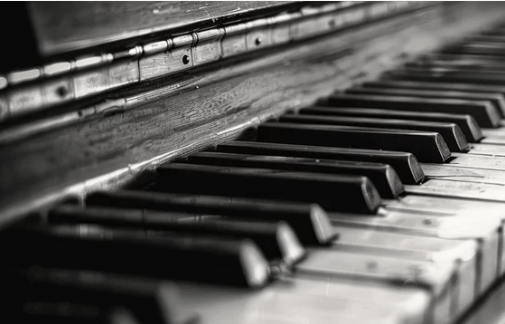
That night at the inn, after more stories and laughter, we decided to explore the parts of the old building that time had forgotten. With a bottle of wine in hand, we opened creaking doors and found ourselves among dust, boxes, and old furniture. In a corner, we discovered a grand piano — out of tune, neglected, but beautiful all the same. He pressed a few keys, smiled at the dissonance, and began to play. It became a concert for three: him, me, and the bottle of red wine. And since there was not much Camorra in me, The Love Theme from The Godfather earned a standing ovation that night.
R.I.P. JVT
 Billy Bronco is telling you